Posted on

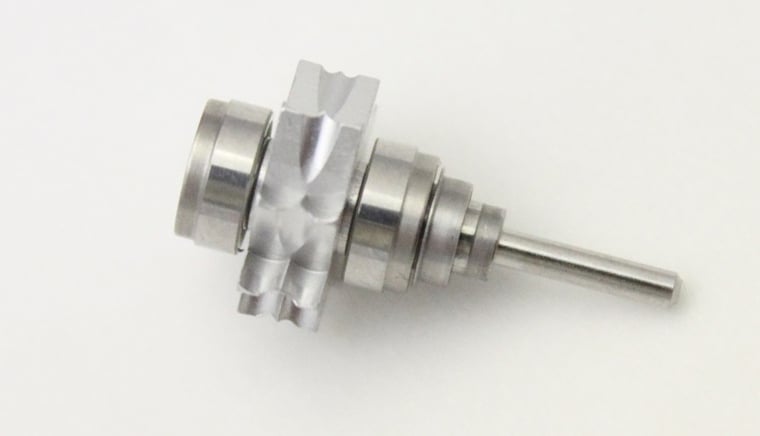
PHP+ Wedge Style vs. Standard Spring Style Chucking Mechanisms

Find our full offering of products with both Standard Line and PHP+ Line options here.

Premium Handpiece Parts is pleased to offer two lines of dental high speed handpiece repair products to fit your unique needs. Read below to learn about the differences between these two lines of products and their chucking mechanisms to figure out which is right for you.

Chucking Mechanism Warranty
Standard Line Spring Style / NSK style 6 Months
PHP+ Line Wedge Style / Kavo style 1 Year

Standard Line: Spring Style Chucking Mechanism

Spring style chucking mechanisms, also known as NSK style chucking mechanisms, rely on a spring as the primary gripping element for the bur. When the button on the back cap is pressed, the spring contracts, expanding the inner diameter to allow smooth insertion of the bur. Upon releasing the button, the spring expands, securely gripping the portion of the bur inserted into the spindle.

While the static retention (pull test) of spring style chucking mechanisms is generally lower than that of wedge style chucking mechanisms, they are known for wearing slowly. This enables the spring style chuck to maintain reliable retention throughout the life of the bearings. However, over time, wear on the metal components will eventually lead to spindle failure.

PHP+ Line: Wedge Style Chucking Mechanism

Wedge style chucking mechanisms, also known as Kavo style chucking mechanisms, use two metal wedges that work in tandem to grip the bur. Pressing the button on the back cap forces the wedges outward, creating enough space for smooth bur insertion. When the button is released, the wedges retract and securely clamp down on the bur.

Wedge style chucks generally provide higher static retention (pull test) compared to spring style chucks. However, this retention force gradually diminishes over time due to wear on the metal from constant movement of the wedge mechanism. To counteract this, the PHP+ spindle line undergoes specialized processing with a high-precision grinding machine to maintain both external and internal tolerances. This process helps the spindles retain their concentricity for a longer period, which is why they come with a longer warranty compared to spring style chucking mechanisms. Still, like all mechanical components, wear on the metal parts will eventually result in spindle failure.

Warranty Length

A key distinction between the two spindle lines is their warranty length. The wedge style chucking mechanism begins with a higher static retention (pull test), which allows it to maintain performance for a longer period and continue functioning in turbine rebuilds before it fails a pull test. In contrast, the spring style chucking mechanism starts with lower static retention, meaning it will typically fail the pull test sooner with normal use and cannot be used in turbine rebuilds once it does.

Both spindles are designed to outlast the lifespan of the bearings and can be used in turbine rebuilds as long as they pass the pull test. However, both chucking mechanisms will eventually experience wear and failure over time due to continued use.

Summary

In summary, both our Standard Line spring style and PHP+ wedge style chucking mechanisms have been rigorously tested to ensure they are reliable and durable for dental handpiece repairs. Both mechanisms are designed to outlast high-quality bearings and deliver long-term performance. While the wedge style spindle is expected to offer a longer lifespan and comes with an extended warranty, both spring style and wedge style chucking mechanisms are dependable choices for maintaining your handpiece’s performance over time.

Find our full offering of products with both Standard Line and PHP+ Line options here.

Posted on

Are dentists using the correct handpieces?

Different dental handpieces with different a standard head, a torque head, and a small head by Premium Handpiece Parts

Most dentists both new and old have no idea there are different handpieces on the market that are used for different facets of dentistry.  When you ask a dentist why they use a specific brand or model of handpiece you will receive answers like, “this is what I have always used,” “this one feels the best in my hands,” or “this one was the best price when I was purchasing my equipment.”  While these comments are true, they are not maximizing their efficiency with each patient losing both time and money.  Your job as a repair technician is to educate the doctor on what handpieces are available and the advantages each will bring to his practice. Continue reading Are dentists using the correct handpieces?

Posted on

The Truth About Dental Turbine Lifespan

Kavo 647B 649B Turbine dental handpiece part for high speed handpiece repair from Premium Handpiece Parts

Just like a sports team, a dental turbine is only as good as its weakest link.  All the components you use to make a dental turbine must be equally good for the turbine itself to output the lifespan you desire.  When a repairman or company tries to cut corners by using cheaper components such as bearings, spindle combos, impellers, or o-rings, the resulting longevity output by the turbine created may not be acceptable for the end consumer or dentist.  By knowing the componentry being used in every repair, you can make educated decisions on how long to warranty your product, how much to charge for your service, and when to expect return business from each customer.

Under proper use and care practices, we have found a dental turbine to last between 10-14 months on average.  This means the majority of repairs we get in from dental practices have lasted within this range of time.  However, there are outlying handpieces that come in within the 0-10-month range and others that have lasted between 14-36 months which leaves many unanswered question on why some turbines using the same componentry work better than others.

The early failures we have found occur for a variety of reasons all of which have to do with the care and usage of the handpieces.  Most commonly, an office is failing to maintain the handpieces adequately lubing them before and after each sterilization cycle.  When a handpiece is not lubricated, the retainers within the bearings dry up becoming brittle.  Once returned to usage, these brittle retainers tend to crack or break due to the speed and torque put on them during normal operation.  Once a bearing’s retainer is broken, there is nothing that can be done within the office to rejuvenate the handpiece’s functionality.  It only takes one of the bearings cracking to render the handpiece broken even if the spindle, impeller, o-rings and remaining bearing are fully functional.  The second most common reason for pre-mature handpiece failures is an inadequate number of handpieces in rotation.  If an office does not have enough handpieces, there isn’t enough time to lubricate, sterilize, and wait for a handpiece to cool.  It is common for the staff to pull handpieces from the sterilizer and return them to use while they are still hot, or manually cool the handpiece by running it under water or putting it into the ultrasonic.  While these techniques seem to cool the handpiece to an appropriate temperature for use, the turbine that is actually needing the resting period does not cool down fully (and naturally).  When the turbine is hot, the retainers within the bearings are slightly expanded not allowing the proper retention to guide the balls within the race of the bearing.  At the stage when torque is applied to the bur, the balls and retainers become misaligned breaking or separating the retainer and balls from the bearing.  When this happens, there is nothing that can be done in the office to rejuvenate the handpiece’s functionality.  The symptoms you will see as a repair man when an office fails to lube their handpieces is a very dry, cracked retainer where otherwise all components look good/new.  The symptoms you will see when a handpiece is being used hot is black or scorched bearings.  The final symptom you may see is a white crystallization on the bearings which occurs when handpieces are wiped down with cavi-wipes or put into the ultrasonic cleaner.

IMG_2230(Broken with poor maintenance)

When a handpiece comes back within the 10-14-month range, this means that the office cares for their handpieces adequately, lubricates properly, and has the correct number of total handpieces in rotation.  This is your ideal customer, but it is important to note that what may be working now may not work forever.  Dental offices, like all businesses, have a constant turn-over of employees and personal.  With turnover comes changes of maintenance schedules and practices.  It is important to realize when an office in this category defaults to premature failures so you can investigate what has changed in their maintenance routines causing these failures.  Not investigating and finding why a single office is having problems with longevity will look negatively on you in the long-term resulting in an angry or loss of customer.

On the high end of turbine longevity, 14+ months, offices have been known to maintain their handpieces with incredible efficiency.  Most offices that fall into this category have lubrication and cleaning machines that take the guesswork out of handpiece care.  Each handpiece receives the correct amount of oil and is flushed pre and post sterilization.  These offices also have an adequate or more than adequate number of handpieces in rotation and make sure to maintain these correct practices with consistency and long-term.

In conclusion, it is important to know the components you’re using and speak with your offices to make sure they are being maintained properly.  In the case that your customers fall within the first category of turbine failure, it is essential to talk with the office, review the recommended maintenance procedures, and follow-up to make sure each handpiece is being cared for properly before, during and after every use.

IMG_2232(Broken with proper maintenance – clean and intact)